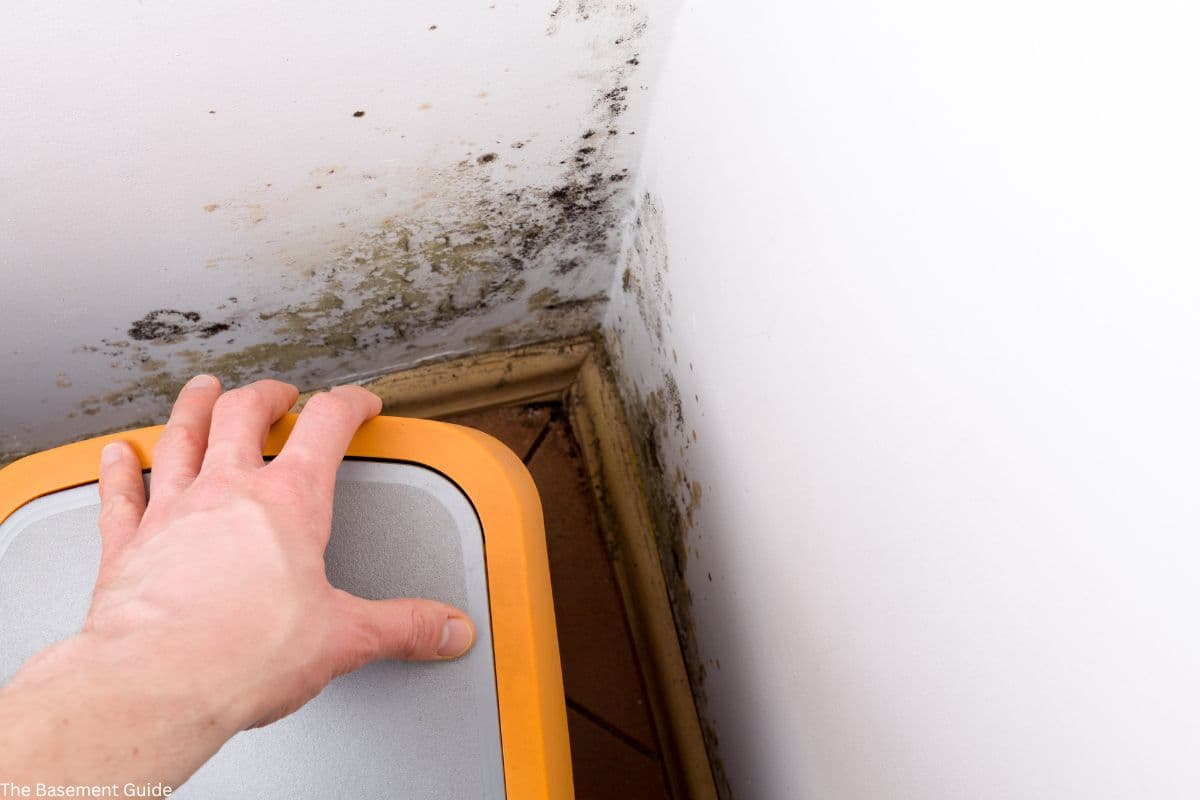
That damp, earthy smell in your basement is extremely common, and it almost always means excess moisture is at work. Even without visible water, hidden dampness creates ideal conditions for mold, mildew, or decaying organic material to release musty microbial odors. Ignoring it can lead to bigger problems like mold growth, health issues, or damage to stored items and finishes.
A musty basement smell is a diagnostic signal before it is a problem to be masked, because the odor is produced by microbial volatile organic compounds (MVOCs) that mold, mildew, and bacteria release as they metabolize organic material in damp conditions. The smell can be present weeks or months before visible mold colonies appear on surfaces, making it the earliest reliable warning that moisture conditions have crossed the threshold where biological growth is occurring. Unlike visible water intrusion which has an obvious location, musty smell requires active investigation to locate because MVOCs travel through air and can originate from hidden sources including the interior of wall cavities, beneath carpet or flooring, behind stored items, or inside HVAC ductwork that circulates basement air throughout the home. The intensity of the smell in different areas of the basement and the conditions under which it worsens (after rain, during humid summer months, near specific walls or drains) are the two primary diagnostic tools for identifying the moisture source before any remediation begins.
The good news is that most musty smells are fixable with the right steps. This guide covers why it happens, how to find the source (a key step many skip), quick DIY fixes, longer-term solutions, and when to call professionals.
What Causes the Musty Smell?
The odor comes from microbial volatile organic compounds (MVOCs) produced by mold, mildew, or bacteria thriving in damp, poorly ventilated spaces. Basements are perfect breeding grounds: cool, dark, low airflow, and often close to groundwater or condensation sources.
Common Culprits
High Humidity Above 60%
Causes condensation on cold concrete walls and floors, creating a constant moisture source.
Minor Seepage
Water passing through foundation cracks, pores, or areas with poor exterior grading.
Poor Exterior Drainage
Downspouts dumping water near the foundation, clogged gutters, and soil sloping toward the house.
Trapped Moisture
Hidden dampness in insulation, drywall, wood framing, cardboard boxes, old carpet, or other stored items.
Less Common Sources
Small plumbing leaks, dead pests in walls, or sewer gas from uncapped drains and cleanouts.
Key Indicator
If the smell worsens after rain or during humid weather, moisture is almost certainly the cause.
Musty basement smell often has two root causes working together: humidity creating conditions for mold and mildew growth, and inadequate ventilation allowing the resulting odor to accumulate rather than dissipate. Addressing humidity alone, without ventilation, can eliminate visible mold but still leave a lingering stale odor because the air itself is never exchanged. For a comprehensive guide to basement ventilation, including how to add mechanical exhaust or balanced ventilation to a basement without windows, see our basement ventilation guide.
Finding the Source of the Smell
Do not skip this step. Pinpointing the origin is crucial — otherwise you are just masking the problem.
Here is how to track it down systematically:
Use Your Nose Like a Detective
Walk slowly around the basement. The smell often gets stronger closer to the source. Note where it is most intense: near walls, corners, floor drains, pipes, windows, or stored items.
Check Humidity Levels
Get a digital hygrometer ($10–$30) and monitor readings in different spots over a few days. Consistent readings above 55–60% point to excess moisture.
Inspect for Visible Clues
- • White powdery efflorescence on concrete (mineral deposits from water passing through)
- • Dark spots, fuzzy growth, or discoloration on walls, baseboards, or corners
- • Bubbling or peeling paint, warped wood, or damp-feeling surfaces
- • Foggy windows or condensation on pipes
Check Hidden Areas
Move boxes, look behind shelves, under stairs, inside closets, or behind drywall if accessible. Mold thrives in dark, undisturbed spots.
Test for Plumbing or Sewer Issues
Sniff near floor drains, cleanouts, or toilets. A stronger sewer-like smell could indicate a dry trap (pour water down drains) or a leak.
Use a Moisture Meter
Affordable models ($20–$50) can detect hidden dampness in walls or floors without tearing things open. Great for confirming seepage.
Pro Tip
Once you locate the hotspot, you know exactly where to focus your fixes. This saves time, money, and prevents recurring problems.
Quick Fixes to Reduce or Eliminate the Smell
Start here for fast results. Many homeowners notice improvement within days.
Run a Dehumidifier
Get a 50-pint or larger unit and run it continuously, aiming for 40–50% humidity. Connect a drain hose or empty the tank regularly. This alone often cuts the smell significantly within a week.
Improve Airflow
Open windows on dry days, add box fans, or install an exhaust fan. Circulating air helps dry things out and disperse trapped odors.
Fix Exterior Basics
Extend downspouts at least 10 feet away from the foundation, regrade soil to slope away from the house, and clean gutters thoroughly.
Remove Moisture Sources
Take out damp boxes, fabrics, and old rugs. Store items in sealed plastic bins elevated off the floor on shelves or pallets.
Clean Surfaces
Scrub walls and floors with a 1:3 vinegar-to-water solution or mild bleach solution. Use a HEPA vacuum to capture mold spores.
Absorb Odors
Place bowls of baking soda, activated charcoal, or coffee grounds around the basement for a few days. Replace as needed until the smell subsides.
Long-Term Solutions for Permanent Results
If quick fixes help but the smell keeps returning, these permanent solutions address the root cause.
Whole-Basement Dehumidifier
Install a unit tied to your HVAC system for consistent, automated humidity control throughout the entire space.
Crystalline Waterproofing or Sealant
Apply professional-grade waterproofing products to walls and floors to block moisture migration through concrete.
Interior Perimeter Drains and Sump Pump
If seepage is ongoing, a perimeter drainage system combined with a reliable sump pump is the gold standard for keeping water out.
Improved Insulation and Vapor Barriers
Proper insulation paired with vapor barriers stops condensation at the source and prevents moisture from reaching interior surfaces.
Smart Humidity Sensors
Install smart sensors that send alerts to your phone when humidity spikes, allowing you to catch problems before they create odors.
When to Call Professionals
If the smell persists after 2–4 weeks of consistent DIY efforts, or you discover visible mold, efflorescence, or structural warning signs, it is time to bring in the experts.
Varies
Mold Remediation
Do not DIY large affected areas
Prevention Tips to Keep the Smell Away
- ✓
Maintain 40–50% humidity year-round using a properly sized dehumidifier.
- ✓
Inspect after every heavy rain for new signs of seepage or moisture.
- ✓
Keep items off the floor and store belongings in sealed plastic bins on shelves.
- ✓
Ventilate regularly and ensure adequate airflow throughout the basement.
- ✓
Use mold-resistant paints and sealants if finishing or renovating your basement.
Bottom Line
A musty smell is almost always a moisture signal. Find the source, reduce humidity, and address drainage for lasting freshness. If your basement smells musty right now, grab a hygrometer and start investigating.
Smell Source and Fix Guide
| Smell Characteristic | Most Likely Source | First Action | Long-Term Fix |
|---|---|---|---|
| Smell strongest near a specific wall, worsens after rain | Water seeping through that wall or cove joint | Run dehumidifier, check exterior drainage | Interior drain tile system and sump pump |
| Smell strongest near floor drains or cleanouts | Dry P-trap or uncapped drain allowing sewer gas entry | Pour water down the drain to refill the trap | Install trap primer or seal unused drains |
| Smell strongest under stairs or in closets | Hidden mold on stored organic materials or wall surfaces | Remove stored items, inspect surfaces for mold | Remediate mold, replace affected materials, run dehumidifier |
| Smell strongest in summer, less in winter | Condensation from warm humid outdoor air hitting cool concrete | Run dehumidifier continuously, keep basement windows closed on humid days | Dehumidifier plus wall insulation to raise surface temperature above dew point |
| Whole-basement smell, no obvious hotspot | High ambient humidity throughout the space | Run dehumidifier, improve airflow | Dehumidifier sized for actual square footage, address exterior drainage |
| Smell present after flooding or water event | Mold established in flooring, wall cavities, or framing after wet event | Remove wet materials within 24 to 48 hours | Professional mold remediation if established growth is found |
| Smell only in one corner near exterior wall | Seepage through that wall section or window well | Inspect window well drainage, check exterior grading at that corner | Seal cracks, improve window well drainage, regrade soil if needed |
| Smell in finished basement, no visible mold | Mold inside wall cavity behind drywall | Use moisture meter to scan walls, note humidity readings | Open wall at highest moisture reading, remediate, reinstall with vapor barrier |
| Smell in HVAC ducts throughout house | Mold in basement HVAC components or ductwork distributing basement air | Inspect HVAC air handler and return air ducts in basement | Professional HVAC duct cleaning plus basement moisture source remediation |
| Musty smell plus visible white powder on concrete | Active moisture migration (efflorescence) | Address exterior drainage, clean efflorescence | Apply penetrating concrete sealer (RadonSeal) to affected walls |
| Smell from cardboard boxes or stored items | Organic materials absorbing basement moisture and supporting mold | Remove affected items, discard moldy cardboard | Replace with sealed plastic bins elevated on shelves off the floor |
| Smell persists after 4 weeks of DIY effort | Hidden source not yet identified | Professional mold inspection ($300 to $600) | Address professionally identified source with targeted remediation |
Glossary
MVOC (Microbial Volatile Organic Compound)
A gas produced by mold, mildew, and bacteria as a byproduct of their metabolic activity when breaking down organic material in damp conditions, responsible for the characteristic musty or earthy odor associated with basement moisture problems. MVOCs are detectable by smell weeks or months before visible mold colonies appear on surfaces, making the musty odor one of the earliest and most reliable indicators that biological growth is occurring somewhere in the space. Different mold species produce different MVOC profiles, which is why basement musty smells can range from earthy and damp to sharp and chemical depending on what species are present and what organic material they are consuming.
Relative humidity
The amount of moisture in the air expressed as a percentage of the maximum moisture that air can hold at a given temperature, with higher temperatures allowing air to hold more moisture before reaching saturation. Relative humidity above 55 percent creates conditions where mold and mildew can begin germinating on surfaces and producing the MVOCs that cause musty odors, while maintaining humidity below 50 percent prevents biological growth from establishing. A digital hygrometer is the only reliable way to know your actual basement humidity level, as the air can feel comfortable while the reading is above the threshold for mold growth. See our basement humidity guide for seasonal targets and monitoring guidance.
Efflorescence
A white, chalky mineral deposit that appears on concrete, brick, or masonry block surfaces when water migrates through the material, dissolves soluble salts, and evaporates on the interior surface leaving the deposits behind. Efflorescence is not mold and does not itself produce musty odors, but it is a reliable visual indicator that water is actively moving through the wall and that the moisture conditions which support mold growth are present in or near that wall section. Finding efflorescence during a smell investigation confirms an active moisture source even when no visible mold is present. See our basement efflorescence guide for how to address the underlying moisture source.
Stack effect
The natural movement of air upward through a building driven by the buoyancy of warm air, which creates a low-pressure zone in the basement that continuously draws basement air including mold spores, MVOCs, humidity, and radon upward into the living areas above. Research suggests that up to 50 percent of the air on the first floor of a home may originate from the basement or crawl space, which is why a musty basement smell that seems mild in the basement can be strongly perceptible on the first floor and why basement mold is a whole-house air quality issue. Running a HEPA air purifier in the basement reduces the concentration of airborne spores and MVOCs before they reach the upper floors through the stack effect. See our best basement air purifiers guide for units suited to below-grade air quality management.
Condensation
The process by which water vapor in warm humid air converts to liquid water when it contacts a surface that is at or below the dew point temperature, which in basements occurs when warm indoor or outdoor air meets the perpetually cool concrete walls and floors that stay near the 50 to 55 degree soil temperature year-round. Condensation is the most common cause of musty basement smell in homes without active water intrusion, because it continuously wets concrete surfaces and any organic materials in contact with them, creating persistent damp conditions that support mold growth. The aluminum foil test (taping a square of foil to the wall for 24 to 48 hours and checking which side is wet) distinguishes condensation from water intrusion through the wall, which affects which solution is appropriate.
Capillary action
The process by which water is drawn upward or laterally through the pore spaces of porous materials like concrete by surface tension forces, drawing moisture from wet soil into the foundation wall continuously without requiring cracks or active water pressure. Capillary moisture migration through concrete walls contributes to the baseline humidity in any basement with an untreated concrete foundation, and the evaporation of this moisture on the interior wall surface creates the perpetually damp concrete conditions where mold and mildew establish. Sealing concrete walls with a penetrating sealer like RadonSeal or a surface coating like Drylok reduces capillary moisture transmission and is part of the long-term solution for musty smell driven by vapor migration rather than active seepage. See our DRYLOK vs RadonSeal guide for how to choose between the two approaches.
Perimeter drain (interior French drain)
A drainage channel installed beneath the basement floor along the base of the foundation walls that intercepts water entering through the cove joint or floor and routes it to a sump pump for removal, addressing the active water intrusion that creates the persistent damp conditions behind the most serious musty smell problems. Interior perimeter drains are the appropriate solution when musty smell is caused by recurring water entry rather than humidity or condensation alone, because they address the moisture at its entry point before it can wet flooring, walls, and stored organic materials. A complete interior drainage system with sump pump typically costs $3,000 to $8,000 and carries 25-year warranties from reputable contractors. See our French drain cost guide for full pricing by system configuration.
Frequently Asked Questions
What causes a musty smell in a basement?
A musty basement smell is caused by microbial volatile organic compounds (MVOCs) released by mold, mildew, or bacteria growing in damp conditions, and is almost always a moisture problem rather than a ventilation problem alone. The five most common moisture sources are high humidity above 55 percent causing condensation on cool concrete surfaces, minor seepage through foundation cracks or porous concrete, poor exterior drainage directing water toward the foundation, trapped moisture in organic materials like cardboard boxes, old carpet, wood framing, or drywall, and less commonly small plumbing leaks or sewer gas from uncapped drains. The smell worsening after rain or during humid summer weather is the most reliable indicator that moisture from outside the home is the primary driver. Identifying which source applies to your basement determines which fix will actually eliminate the smell rather than temporarily masking it. See our how to prevent basement mold guide for the full moisture management framework.
How do I find the source of the musty smell?
Start by walking slowly around the basement and noting where the smell is most intense, since MVOCs are strongest closest to their source. Use a digital hygrometer ($10 to $30) to measure humidity in multiple locations over several days, as readings consistently above 55 to 60 percent confirm excess moisture even without visible water. Inspect visually for efflorescence (white mineral deposits on concrete), dark spots or fuzzy growth on walls or floor joists, bubbling or peeling paint, and condensation on pipes or windows. Check hidden areas behind shelving, under stairs, inside closets, and behind drywall if accessible, since mold grows in dark undisturbed spaces long before it appears in open areas. A pinless moisture meter ($20 to $50) can detect elevated moisture inside walls and floors without opening them, confirming hidden dampness that visual inspection alone misses. Smell near floor drains, cleanouts, and pipe penetrations specifically for a sewage-like odor that indicates a dry trap or plumbing issue rather than a mold source.
How do I get rid of a musty smell in my basement?
Getting rid of the smell permanently requires addressing the moisture source rather than masking the odor, because MVOCs are continuously produced as long as the biological growth generating them continues. Start by running a properly sized dehumidifier (50 pint or larger for most basements) continuously to bring humidity below 50 percent, and extend downspouts at least 10 feet from the foundation to reduce exterior water contribution. Remove damp organic materials including cardboard boxes, old rugs, and fabric items that may be harboring mold growth and replace them with sealed plastic storage bins elevated off the floor. Clean visible mold on hard surfaces with a non-bleach mold cleaner such as Concrobium and scrub efflorescence from concrete walls to remove the mineral deposits left by migrating moisture. If the smell persists after 2 to 4 weeks of consistent dehumidification and cleanup, the source is likely hidden inside a wall cavity, beneath flooring, or in a location requiring professional inspection. See our mold remediation cost guide for what professional assessment and remediation costs.
Will a dehumidifier get rid of musty basement smell?
A dehumidifier will significantly reduce or eliminate musty smell in basements where high humidity and condensation are the primary moisture source, because lowering humidity below 50 percent removes the conditions that allow mold and mildew to continue growing and producing MVOCs. However, a dehumidifier alone will not eliminate the smell if the source is active water intrusion through foundation cracks or the cove joint, hidden mold already established inside wall cavities or beneath flooring, organic materials that are already contaminated with mold growth, or sewer gas from dry traps or plumbing issues. In those cases the dehumidifier manages ambient humidity but cannot reach the actual growth source that is producing the smell. The correct sequence is to identify and address the moisture source, remove or remediate any affected organic materials, and then run the dehumidifier to maintain safe humidity going forward. See our dehumidifier myths guide for common sizing and placement mistakes that prevent dehumidifiers from achieving their target humidity.
Is a musty basement smell dangerous?
Yes, a musty smell indicates active mold or mildew growth which poses real health risks, particularly for occupants with allergies, asthma, or compromised immune systems. MVOCs themselves can cause headaches, nausea, and respiratory irritation at sustained low-level exposure, and the mold spores that accompany the smell trigger allergic reactions including sneezing, congestion, itchy eyes, and skin irritation in sensitive individuals. The stack effect in homes pulls basement air upward into living areas continuously, meaning basement mold spores and MVOCs affect whole-house air quality rather than remaining contained to the basement. Children, elderly individuals, and anyone with chronic respiratory conditions are at highest risk from prolonged mold exposure, and symptoms that worsen at home and improve when away are a strong indicator that indoor air quality is affected. Do not ignore a persistent musty smell as a minor inconvenience — treat it as an early warning that requires investigation and remediation. See our how to prevent basement mold guide for health context and prevention steps.
How long does it take to get rid of musty basement smell?
If humidity is the primary cause, running a properly sized dehumidifier continuously typically reduces or eliminates the smell within 1 to 2 weeks as humidity drops and the biological growth slows and stops producing MVOCs at the previous rate. If organic materials like cardboard, old carpet, or stored items are harboring mold, removing those items combined with dehumidification typically resolves the smell within 1 to 3 weeks depending on how extensively the space was affected. If the source is active water seepage, the smell will not fully resolve until the water entry is addressed through crack sealing, drainage improvements, or a sump pump installation, after which dehumidification can clear the residual odor within 1 to 2 weeks. Hidden mold inside wall cavities or beneath flooring takes longest to address because it requires opening the assembly, remediating the growth, and allowing the space to dry fully before the smell dissipates. Persistent smell after 4 weeks of consistent DIY effort is a reliable indicator that the source has not been fully identified or addressed and professional inspection is warranted.
When should I call a professional for a musty basement smell?
Call a professional if the smell persists after 2 to 4 weeks of consistent dehumidification, exterior drainage improvements, and removal of damp organic materials. Also call a professional if you discover visible mold covering more than 10 square feet, if you suspect mold inside wall cavities or beneath flooring based on the smell location but cannot confirm visually, or if anyone in the household is experiencing respiratory symptoms that may be related to mold exposure. A mold inspection costs $300 to $600 and can identify hidden growth and airborne spore counts that DIY investigation cannot. Many waterproofing contractors offer free assessments for moisture-related smell complaints, which is a cost-effective first step when the source appears to be water intrusion rather than surface mold. See our mold remediation cost guide for what professional assessment and remediation costs by scope.