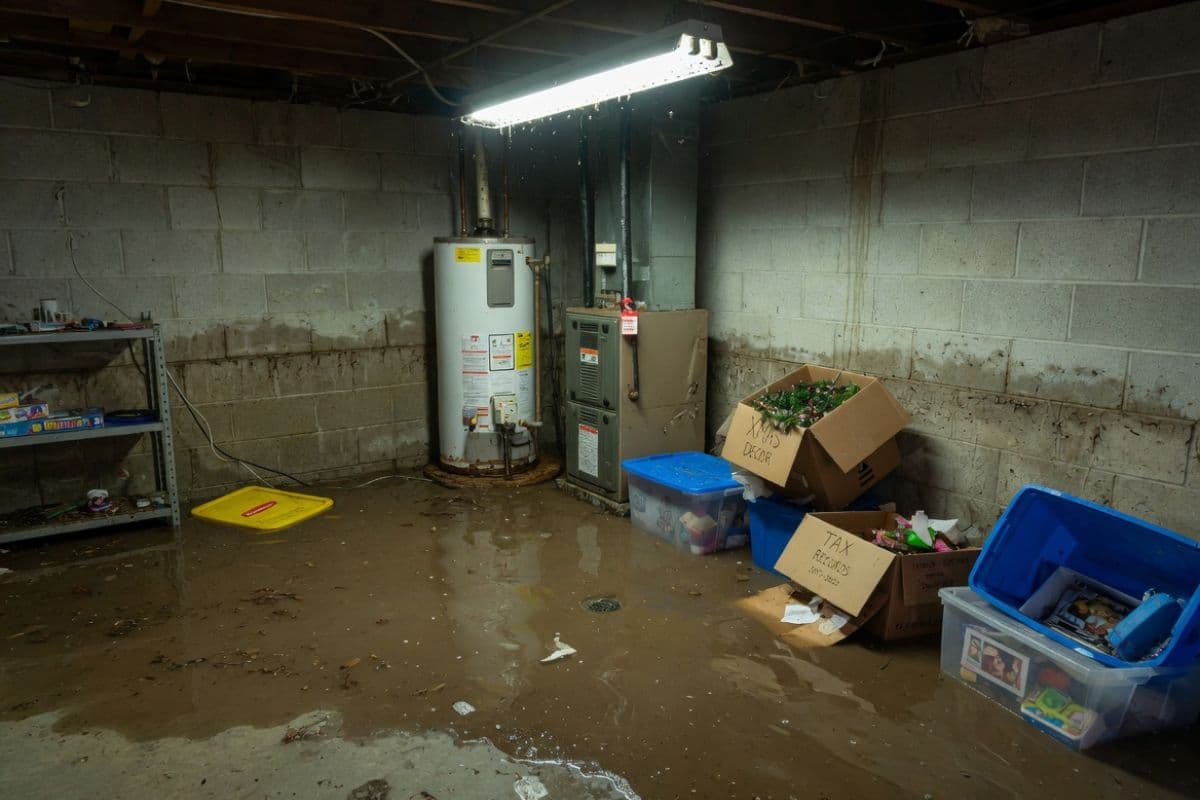
Cleaning up the flood yourself? This page covers what professional cleanup and restoration cost. For the step-by-step DIY process, from the first hour to a dry basement, see our guide to what to do when your basement floods.
TL;DR
- Most homeowners pay $1,300 to $6,400 for professional basement flood cleanup. The national average for water damage restoration is about $3,500.
- Per square foot, expect about $3.50 to $4 for clean water, $4 to $6.50 for gray water, and $7 to $7.50 or more for sewage, before anything gets rebuilt.
- Removing an inch of clean water from a basement runs $500 to $1,500.
- Finished basements cost the most. Wet drywall, insulation, and carpet have to come out, and rebuilding is billed separately. Budget $5,000 to $15,000 or more for cleanup plus rebuild.
- Sewage backups start around $7,000 to $10,000 for a 1,000 sq ft basement and climb with every item that has to be thrown out.
- Insurance depends on where the water came from. A burst pipe is usually covered. Groundwater flooding needs flood insurance, and sewer or sump backups need a backup endorsement.
- Speed is the biggest cost lever. Every day water sits adds drying time and raises the odds of mold, which adds $1,500 to $9,000.
Basement Flood Cleanup Cost at a Glance
| What You're Paying For | Typical Cost |
|---|---|
| Average water damage restoration | About $3,500 |
| Typical range for most homes | $1,300 to $6,400 |
| Clean water (Category 1), per sq ft | $3.50 to $4 |
| Gray water (Category 2), per sq ft | $4 to $6.50 |
| Sewage or black water (Category 3), per sq ft | $7 to $7.50+, plus replacement |
| Extracting 1 inch of clean water from a basement | $500 to $1,500 |
| Mold remediation, if it develops | $1,500 to $9,000 |
| Drywall replacement | $1.50 to $3 per sq ft |
| Carpet drying or replacement | $1 to $11 per sq ft |
| Restoration labor | $70 to $200 per hour |
Ranges are national 2026 figures compiled from HomeAdvisor, LawnStarter, and SERVPRO cost data. Prices run higher in big metro areas, after hours, and after regional storms when every crew in town is booked.
The Category Rule: What Kind of Water Sets the Price
The single biggest factor in what you'll pay is the water category, a standard restoration companies and insurers use to classify how contaminated the water is.
| Category | Where It Comes From | Per Sq Ft | Can You DIY It? |
|---|---|---|---|
| Category 1: Clean | Burst supply pipe, water heater, leaking washer supply line | $3.50 to $4 | Usually, if it's caught within 24 hours |
| Category 2: Gray | Washer drain, dishwasher, sump pump failure, groundwater seepage, clean water that sat 48+ hours | $4 to $6.50 | Sometimes, with gloves, disinfecting, and fast drying |
| Category 3: Black | Sewer or septic backup, outdoor floodwater, toilet overflow with waste | $7 to $7.50+ | No. Hire a pro. |
The Category Rule: price your cleanup by the dirtiest water that touched the basement, not the cleanest. Clean water turns gray after about 48 hours as bacteria grow, and gray turns black if it sits long enough. That's why a burst pipe found on Monday can cost twice as much as the same leak found on Friday night.
Category 3 water is a health hazard. It carries bacteria, viruses, and parasites, and anything porous it touches, like carpet, drywall, insulation, and upholstered furniture, has to be thrown out. That's what pushes sewage cleanup well past the per-square-foot rate.
5-Minute Estimate: What Will Your Cleanup Cost?
Answer these five questions to get a realistic range before you call anyone.
- Where did the water come from? Use the category table above. Supply pipe or water heater is clean. Sump failure, groundwater, or washer drain is gray. Sewer, septic, or outdoor floodwater is black.
- How much floor got wet? Measure the wet area in square feet. A typical basement is 800 to 1,200 sq ft, but many floods only cover part of it.
- How deep did it get? Under an inch is a wet-vac and drying job. One to six inches needs pumps and extraction. Over six inches, expect wall damage and longer drying.
- Is the basement finished? Unfinished concrete dries fast. Carpet, pad, drywall, and insulation add removal and disposal on day one and rebuild costs later.
- How long has the water been there? Under 24 hours is the best case. Past 48 hours, plan for gray water pricing and a mold check.
Rough math: wet square feet times the per-square-foot rate for your category. Then add rebuild costs for anything that had to be torn out.
Example: a sump pump fails during a storm and leaves 2 inches of water across 900 sq ft of unfinished basement, found the next morning. That's gray water: 900 sq ft times $4 to $6.50 is about $3,600 to $5,850 for extraction, cleaning, and drying.
Basement Flood Cleanup Cost by Scenario
| Scenario | Typical Cost | What's Included |
|---|---|---|
| Small clean water leak, unfinished, under 1 inch | $500 to $1,500 | Extraction, fans, and a dehumidifier for a few days |
| Clean water, 1,000 sq ft unfinished, a few inches | $3,300 to $4,100 | Extraction, drying, moisture readings |
| Gray water, 1,000 sq ft unfinished (sump failure, seepage) | $4,100 to $7,000 | Extraction, cleaning, antimicrobial treatment, drying |
| Finished basement, clean or gray water, cleanup only | $4,000 to $8,000 | Extraction, carpet and pad removal, flood cut of drywall, insulation removal, drying |
| Finished basement, cleanup plus rebuild | $5,000 to $15,000+ | All of the above plus new drywall, insulation, flooring, trim, and paint |
| Sewage backup, 1,000 sq ft | $7,000 to $10,000+ | Category 3 extraction, removal of all porous materials, disinfection, drying, plus rebuild |
| Mold found after the flood | Add $1,500 to $9,000 | Containment, removal, HEPA cleaning, antimicrobial treatment |
The rebuild is often the biggest number, and it's a separate job. Restoration companies dry and clean. A contractor or the restoration company's rebuild division puts the basement back together, often after a separate estimate.
What's in a Professional Cleanup Bill
Restoration estimates usually list these line items. Most companies, and most insurers, price them with the same estimating software, so line items should look similar across quotes.
| Line Item | Typical Cost | Notes |
|---|---|---|
| Emergency service call | $100 to $300 | Often waived if you hire them for the job |
| Water extraction | $500 to $1,500 per inch for a typical basement | Truck-mounted or portable extractors |
| Air movers | $25 to $50 per fan per day | Usually 1 per 10 to 15 linear feet of wall |
| Commercial dehumidifiers | $50 to $100+ per unit per day | Pull 100+ pints a day |
| Drying days | Usually 3 to 5 days | Billed per day of equipment |
| Antimicrobial treatment | Often $0.50 to $1 per sq ft | Standard for gray and black water |
| Carpet and pad removal | $1 to $3 per sq ft | Plus disposal |
| Drywall flood cut | Often $1 to $3 per sq ft of wall | Cut 1 to 2 feet above the water line |
| Contents moving or pack-out | $500 to $2,000+ | Moving and storing furniture and boxes |
| Moisture monitoring | Usually included | You should get daily readings in writing |
DIY vs. Professional Cleanup Cost
| Approach | Typical Cost | Best For |
|---|---|---|
| DIY with what you own | $0 to $200 | Small clean water leak, unfinished floor, under an inch |
| DIY with rented equipment | $500 to $1,500 | Clean water up to a few inches, unfinished basement, caught fast |
| Professional extraction and drying only | $1,500 to $3,500 | Larger clean or gray water floods |
| Full professional restoration | $3,500 to $15,000+ | Finished basements, sewage, or water that sat more than 48 hours |
DIY rental math: a submersible pump rents for $30 to $60 a day, a commercial dehumidifier for $50 to $100 a day, and air movers for $25 to $50 a day each. Four days of a dehumidifier and four fans runs about $600 to $1,200 before your time.
DIY makes sense when the water is clean, the floor is concrete, and you can start within hours. It stops making sense when the water is sewage, when drywall and carpet are soaked, or when your insurer wants professional moisture documentation for the claim. Our step-by-step guide to what to do when your basement floods walks through the DIY process.
What Insurance Pays For
Whether insurance pays depends on where the water came from, not how much damage it did.
| Water Source | Standard Homeowners Policy | What You Need |
|---|---|---|
| Burst or leaking pipe, water heater, appliance supply line | Usually covered | Standard policy |
| Sewer or drain backup | Usually not covered | Water backup endorsement |
| Sump pump failure or overflow | Usually not covered | Water backup endorsement |
| Groundwater, surface water, or river flooding | Not covered | Flood insurance (NFIP or private) |
| Slow leak or seepage over time | Usually not covered | Fix the cause. Considered maintenance. |
A water backup endorsement typically costs $50 to $250 a year and comes with coverage limits of $5,000 to $25,000. Check your limit before you start a big cleanup, since a sewage backup in a finished basement can blow past $10,000.
Before you file: photograph and video everything before you move it, keep damaged items until the adjuster sees them or approves disposal, and get the restoration company's moisture logs and itemized invoice. See our full guide to basement flooding insurance.
How to Choose a Basement Flood Cleanup Company
Restoration is an emergency purchase, which makes it easy to overpay. A few minutes of checking protects you.
Look for:
- IICRC certification. The Institute of Inspection, Cleaning and Restoration Certification sets the industry drying standard. Ask for the certified technician's name.
- A written, itemized estimate before work beyond emergency extraction begins.
- Daily moisture readings in writing, with the equipment count and drying goal.
- Experience with your insurer. Companies that work claims regularly know what adjusters want documented.
- Clear rebuild terms. Ask whether they rebuild or only dry, and whether the rebuild is a separate contract.
Red flags:
- Pressure to sign an assignment of benefits on the spot. It lets the company bill your insurer directly and can limit your control over the claim. Read it, or skip it.
- No written estimate, or a quote that's just one number.
- Equipment left running for days with no moisture readings.
- Claims that "everything has to go" on a clean water job caught within 24 hours.
- Door-to-door crews showing up after a regional storm.
10-Year Cost: Prevention vs. Another Flood
Most basements that flood once flood again. Here's how prevention compares to paying for cleanup a second time.
| Prevention Step | Upfront Cost | 10-Year Cost |
|---|---|---|
| Battery backup sump pump | $350 to $900 installed | $500 to $1,200 with one battery replacement |
| Water leak sensors and sump high water alarm | $50 to $200 | $100 to $300 with battery changes |
| Water backup insurance endorsement | $50 to $250 a year | $500 to $2,500 |
| Backwater valve on the sewer line | $1,000 to $3,000 installed | $1,000 to $3,000 |
| Downspout extensions and grading fixes | $100 to $1,500 | $100 to $1,500 |
| One more flood, gray water, finished basement | $5,000 to $15,000+ |
Even doing all of it costs less than one repeat flood in a finished basement. Start with the sump backup and an alarm. See our best sump pumps for 2026 and best water leak detectors.
Common Mistakes That Raise Your Cleanup Bill
- Waiting to see if it dries on its own. Concrete and framing hold water for days. Past 48 hours, clean water becomes gray water and mold becomes likely.
- Throwing things out before photographing them. Without documentation, insurers can deny or reduce the claim.
- Running a household dehumidifier and calling it done. A 50-pint unit can't dry a flooded basement. Commercial units pull 100 pints or more a day.
- Leaving wet drywall and insulation in place. Drywall wicks water upward and hides wet insulation behind it. Leaving it in turns a drying bill into a mold bill.
- Hiring the first company that answers without a written estimate. Emergency pricing is real, but the scope should still be in writing.
- Treating sewage like clean water. DIY cleanup of Category 3 water risks your health and usually leaves contamination in porous materials.
- Skipping the cause. Paying for cleanup without fixing the failed sump pump, missing backwater valve, or grading problem sets up the next bill.
When to Call a Professional
Call a restoration company, not just a plumber, when any of these are true:
- The water is sewage, septic, or outdoor floodwater.
- Water reached drywall, carpet, or insulation in a finished basement.
- The water has been sitting more than 48 hours.
- More than a few hundred square feet are wet, or water is more than an inch deep.
- You see or smell mold.
- Your insurer requires professional moisture documentation.
- The electrical panel, outlets, or a gas appliance got wet. Call the utility or an electrician before anyone goes in.
Frequently Asked Questions
How much does it cost to clean up a flooded basement?
Most homeowners pay $1,300 to $6,400 for professional basement flood cleanup, with the national average for water damage restoration around $3,500. Clean water runs about $3.50 to $4 per square foot, gray water $4 to $6.50, and sewage $7 to $7.50 or more, before rebuilding. A finished basement with cleanup and rebuild often reaches $5,000 to $15,000 or more.
How much does water removal from a basement cost?
Extracting one inch of clean water from a typical basement costs about $500 to $1,500. Deeper water, gray or black water, and finished floors cost more. Water removal is usually the first line item on a restoration bill, followed by several days of drying equipment.
How much does sewage backup cleanup cost?
Sewage backup cleanup starts around $7 to $7.50 per square foot, so a 1,000 sq ft basement typically costs $7,000 to $10,000 or more once porous materials are removed and replaced. Standard homeowners policies usually exclude sewer backups unless you carry a water backup endorsement.
Does homeowners insurance cover basement flood cleanup?
It depends on the water source. Sudden internal water, like a burst pipe or failed water heater, is usually covered. Sewer and sump pump backups usually need a water backup endorsement, and groundwater or surface flooding needs flood insurance. Slow leaks and seepage are typically treated as maintenance and excluded.
How long does professional basement flood cleanup take?
Extraction usually takes a few hours to a day. Drying with commercial equipment typically takes 3 to 5 days, and longer for deep floods, cold basements, or block walls. Rebuilding a finished basement afterward can take another 2 to 8 weeks.
Is it cheaper to clean up a flooded basement myself?
For a small clean water leak on unfinished concrete, yes. DIY with rented equipment usually costs $500 to $1,500. For sewage, finished basements, or water that's been sitting more than 48 hours, DIY often costs more in the end because missed moisture leads to mold remediation at $1,500 to $9,000.
How do I know if a restoration company's quote is fair?
Compare the per-square-foot cost against the category rates on this page, and ask for an itemized estimate showing extraction, equipment days, antimicrobial treatment, and removal. Fair quotes include daily moisture monitoring and a defined drying goal. Get a second quote for anything beyond emergency extraction if you have time.
What drives basement flood cleanup costs up the most?
Four things: the water category, how long the water sat, whether the basement is finished, and how much has to be thrown out and rebuilt. Sewage in a finished basement found days later is the most expensive combination. Clean water on bare concrete found within hours is the cheapest.
Glossary
Water category: The restoration industry's contamination scale. Category 1 is clean, Category 2 is gray, and Category 3 is black or sewage.
Water class: A separate scale for how much water was absorbed and how hard the space is to dry, from Class 1 (minimal) to Class 4 (deeply saturated materials like concrete and hardwood).
Extraction: Removing standing water with pumps and truck-mounted or portable extractors before drying starts.
Air mover: A high-velocity fan aimed along walls and floors to speed evaporation.
Commercial dehumidifier: A high-capacity unit, often 100+ pints a day, used to pull evaporated moisture out of the air during drying.
Flood cut: Cutting drywall 1 to 2 feet above the water line to remove wet material and expose the wall cavity for drying.
Antimicrobial treatment: A disinfecting product applied to framing and hard surfaces after gray or black water to limit bacteria and mold.
IICRC: The Institute of Inspection, Cleaning and Restoration Certification, which sets the standards most restoration companies follow.
Water backup endorsement: An add-on to a homeowners policy that covers damage from sewer, drain, or sump pump backups.
Assignment of benefits: A document that lets a contractor bill your insurer directly. Read it carefully before signing.
Related Guides
- What to Do When Your Basement Floods: Cleanup and Drying Step by Step
- Basement Flooding Insurance
- Mold Remediation Cost
- Why a Basement Floods Even With a Sump Pump
- Best Sump Pumps for 2026
- Sump Pump Replacement Cost
- Best Water Leak Detectors and Basement Water Alarms
- Interior Basement Drainage Systems
- Complete Basement Waterproofing Guide
Sources: cost ranges compiled from HomeAdvisor water damage restoration cost data, LawnStarter's 2026 water damage restoration cost guide, and SERVPRO sewer backup cost resources.