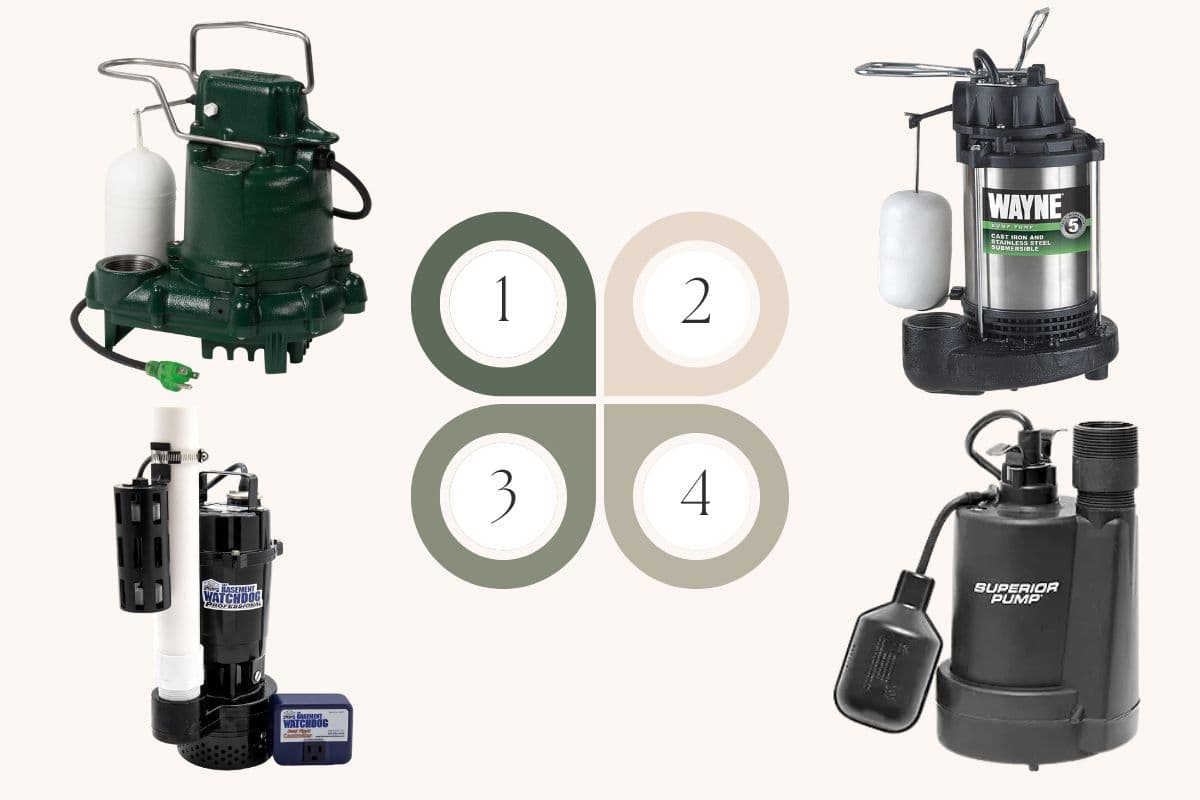
A sump pump is a submersible or pedestal-mounted electric pump installed in a pit at the lowest point of your basement that automatically activates when water reaches a set level and pumps it out through a discharge line to a safe distance from your foundation. The best sump pumps for 2026 range from $150 to $600, run at 1/3 to 3/4 HP, and can move 2,500 to 5,500 gallons per hour depending on the model. Submersible pumps sit inside the pit and run quieter, making them the better choice for finished basements, while pedestal pumps keep the motor above the pit for easier servicing and a longer lifespan. This guide reviews the 6 best sump pumps for 2026 across both types, with full specs, noise ratings, and a decision table to help you match the right pump to your basement.
Sump pumps are a real lifesaver for keeping your basement from turning into a swimming pool, especially if you deal with heavy rain or a high water table. This guide rounds up the top submersible and pedestal sump pumps for 2026 so you can match the right pump to your basement.
Picking up from our submersible vs. pedestal sump pump guide, this roundup highlights the top three models in each style based on 2026 reviews from trusted consumer testing and home improvement resources.
Most of the pumps below fall in the 1/3 to 1/2 HP range and can move roughly 2,500–4,000 gallons per hour (GPH) at 5 feet of lift. That covers what most homeowners need, and every pick includes an automatic float switch and check valve compatibility.
Quick Look: Best Sump Pumps for 2026
| Model | Type | HP | GPH @ 5' Head | Price Range | Noise Level | Warranty | Best For |
|---|---|---|---|---|---|---|---|
| Zoeller M53 Mighty-Mate | Submersible | 1/3 HP | 2,580 | $150–$180 | 50–53 dB | 1 year | Heavy use, gritty water, frequent flooding |
| Wayne CDU980E | Submersible | 3/4 HP | 5,490 | $180–$220 | 54–57 dB | 3 years | Large basements, fast water removal |
| Liberty Pumps 257 | Submersible | 1/3 HP | 2,640 | $160–$190 | 48–52 dB | 2 years | Tight pits, finished basements, quiet operation |
| Superior Pump 92333 | Pedestal | 1/3 HP | 2,760 | $80–$110 | 58–62 dB | 1 year | Budget installs, occasional light flooding |
| Wayne SPT33 | Pedestal | 1 HP | 6,000 | $130–$160 | 55–60 dB | 2 years | Moderate water, easy-access pits |
| Basement Watchdog BWSP | Pedestal | 1/2 HP | 4,100 | $150–$190 | 56–60 dB | 2 years | Homeowners who want built-in alerts |
Top 3 Submersible Sump Pumps for 2026
Submersible sump pumps sit down in the pit, stay out of the way, and usually run more quietly than pedestal pumps. They are a strong match for active basements, finished spaces, and gritty water conditions.
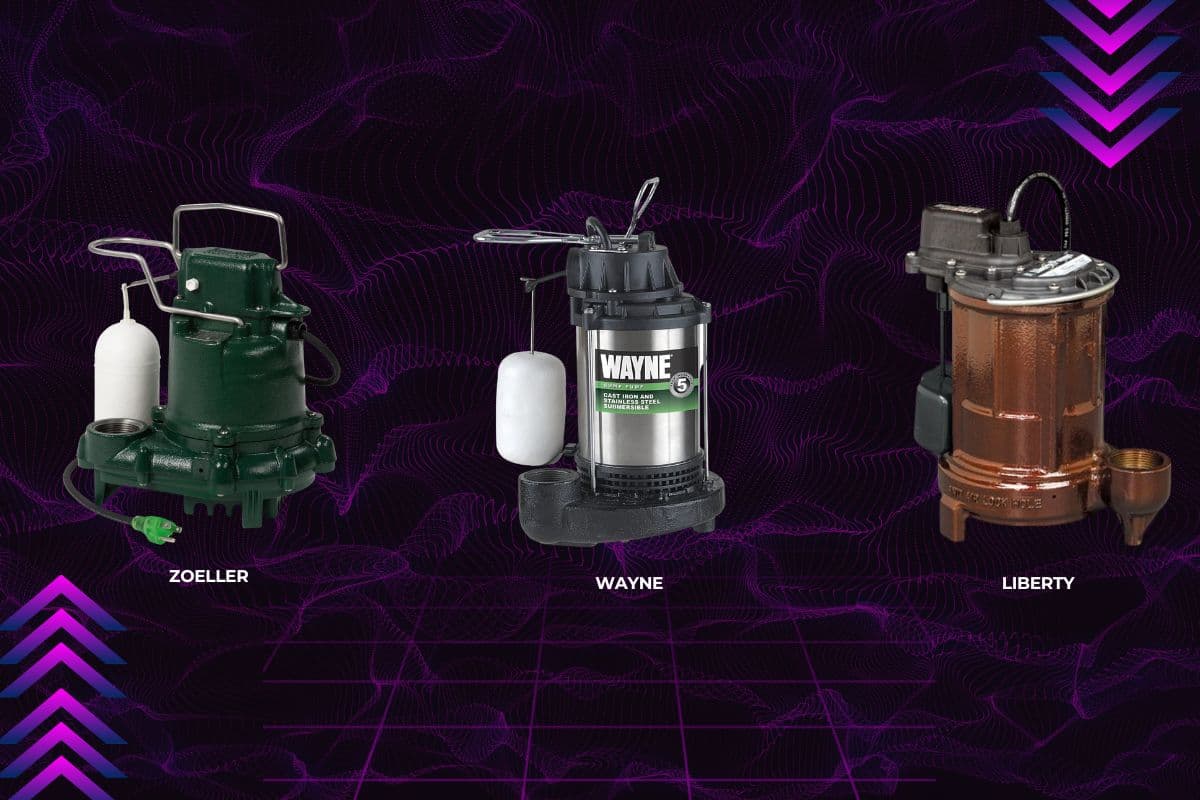
1. Zoeller M53 Mighty-Mate — Best for Heavy Use
The Zoeller M53 is the pump that professional waterproofing contractors reach for when a basement floods regularly. It uses a cast-iron housing not plastic, a 1/3 HP motor, and an automatic float switch that activates the moment water rises in the pit. At 2,580 GPH at 5 feet of head, it moves serious water and can handle solids up to 1/2 inch meaning grit, fine debris, and sediment won’t kill it the way they kill cheaper pumps.
Specs
- Type: Submersible
- HP: 1/3
- GPH at 5’ head: 2,580
- Noise level: 50 to 53 dB
- Price range: $150 to $180
- Warranty: 1 year
Pros
- ✓ Cast-iron construction handles heavy, gritty water without degrading
- ✓ Runs quietly at 50 to 53 dB suitable for finished basements
- ✓ Built-in thermal overload protection prevents motor burnout
- ✓ Automatic float switch activates reliably without manual intervention
- ✓ Proven track record commonly lasts 10 to 15 years in typical residential use
Cons
- ✗ Heavier than plastic models at roughly 30 pounds
- ✗ No built-in alarm or battery backup
- ✗ 1-year warranty is shorter than competitors at this price point
- ✗ Higher upfront cost than budget pedestal options
Best for: Basements that flood frequently, pits with gritty or sediment-heavy water, and homeowners who want a pump they won’t have to think about for a decade. If your basement is your primary defense against water intrusion and you can only buy one pump, this is the one.
Check Price on Amazon2. Wayne CDU980E — Best for Large Basements
The Wayne CDU980E is the highest-capacity pump on this list and it earns that position. A 3/4 HP motor pushing 5,490 GPH means it can evacuate a flooded basement faster than any other pump here nearly twice the flow rate of the Zoeller M53. The combination of stainless steel and cast-iron construction resists corrosion from the minerals and sediment common in high water table basements, and the vertical float switch fits cleanly in narrower pits without getting stuck on the pit walls.
Specs
- Type: Submersible
- HP: 3/4
- GPH at 5’ head: 5,490
- Noise level: 54 to 57 dB
- Price range: $180 to $220
- Warranty: 3 years
Pros
- ✓ Highest flow rate on this list at 5,490 GPH
- ✓ 3-year warranty longest coverage of any pump reviewed here
- ✓ Stainless steel and cast-iron construction resists corrosion
- ✓ Vertical float design works in narrower pits
- ✓ Straightforward installation no special tools required
Cons
- ✗ Louder than the Zoeller at 54 to 57 dB
- ✗ Higher price point than 1/3 HP options
- ✗ More power than most average-sized basements need
- ✗ May cycle more frequently in smaller pits due to high flow rate
Best for: Large basements over 1,500 square feet, homes in low-lying areas or near bodies of water, and any situation where you need water out fast during a storm. The 3-year warranty also makes it the best long-term value on this list.
Check Price on Amazon3. Liberty Pumps 257 — Best for Tight Pits
The Liberty Pumps 257 is the quietest pump on this list at 48 to 52 dB barely louder than a quiet conversation which makes it the standout choice for finished basements used as bedrooms, offices, or media rooms. The compact footprint of roughly 10 inches across fits into pits that would be too tight for the Zoeller or Wayne, and the quick-connect power cord simplifies installation and future replacement.
Specs
- Type: Submersible
- HP: 1/3
- GPH at 5’ head: 2,640
- Noise level: 48 to 52 dB
- Price range: $160 to $190
- Warranty: 2 years
Pros
- ✓ Quietest pump on this list at 48 to 52 dB
- ✓ Compact 10-inch footprint fits tight or undersized pits
- ✓ Quick-connect power cord simplifies installation and replacement
- ✓ Durable switch mechanism with strong reliability record
- ✓ 2-year warranty with good manufacturer support
Cons
- ✗ Lower flow rate than the Zoeller and Wayne not ideal for heavy flooding
- ✗ No built-in alarm
- ✗ Not designed for pits with heavy sediment or solids
- ✗ Costs more than the Zoeller for slightly less raw power
Best for: Finished basements where pump noise is a concern, pits under 12 inches in diameter, and homeowners who experience moderate water intrusion rather than severe flooding. Pair it with a smart sump pump monitor to compensate for the lack of a built-in alarm.
Check Price on AmazonTop 3 Pedestal Sump Pumps for 2026
Pedestal sump pumps keep the motor up above the pit, which makes them easy to service and often extends their lifespan. They are a great fit for unfinished spaces or situations where you want simple access and long-term durability.
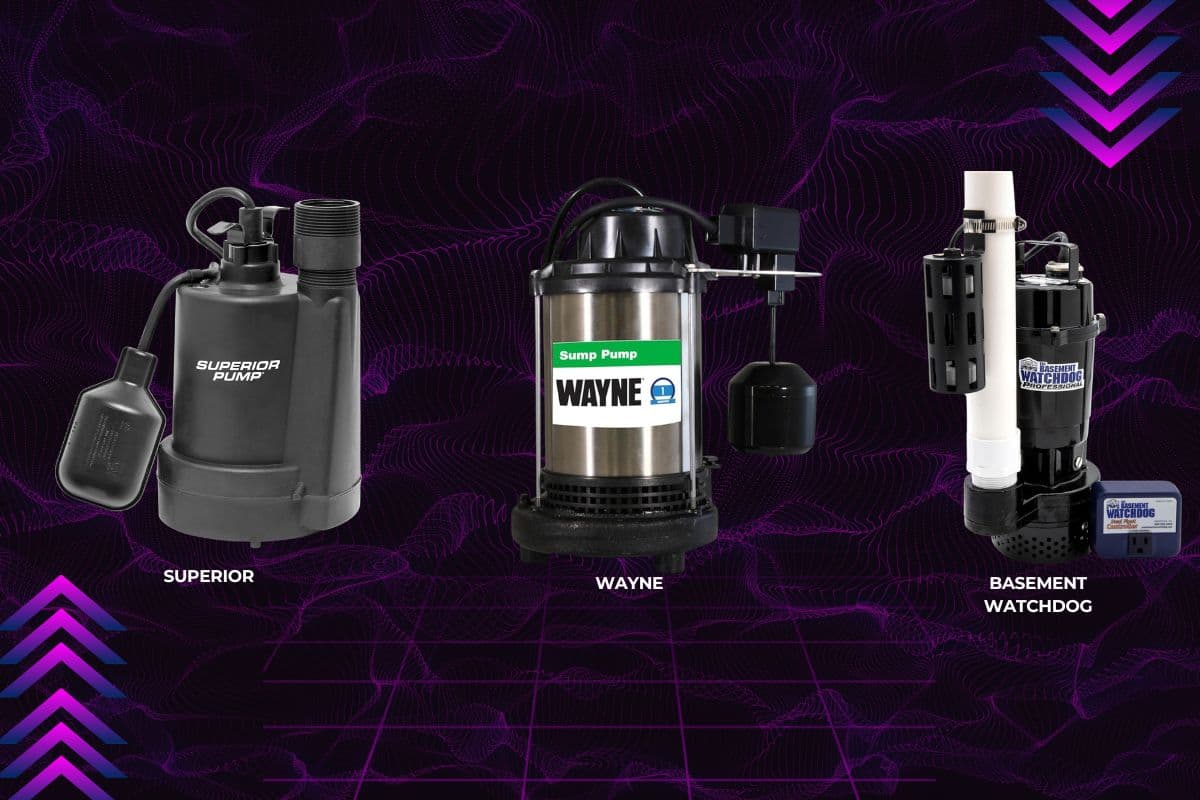
1. Superior Pump 92333 — Best Budget Pedestal
The Superior Pump 92333 proves you don’t need to spend $200 to get reliable basement protection. At $80 to $110, it’s the most affordable pump on this list, and its stainless steel shaft and 1/3 HP motor are built to last 15 to 20 years in basements that see occasional or light flooding. The motor sits above the pit on a pedestal column, which keeps it completely out of the water and makes it easy to inspect and service without getting into the pit.
Specs
- Type: Pedestal
- HP: 1/3
- GPH at 5’ head: 2,760
- Noise level: 58 to 62 dB
- Price range: $80 to $110
- Warranty: 1 year
Pros
- ✓ Most affordable pump on this list at $80 to $110
- ✓ Motor sits above pit easy to inspect and service
- ✓ Stainless steel shaft resists corrosion over long-term use
- ✓ Can last 15 to 20 years in light-duty applications
- ✓ Good flow rate for the price at 2,760 GPH
Cons
- ✗ Loudest pump on this list at 58 to 62 dB not suitable for finished basements
- ✗ Requires a deeper pit of at least 18 inches
- ✗ Not suitable for pits with heavy sediment or debris
- ✗ Basic feature set no alarm, no backup, no smart features
Best for: Unfinished basements that see occasional light flooding, budget-conscious homeowners replacing an aging pedestal pump, and secondary or vacation homes that need reliable basic protection without a high upfront cost.
Check Price on Amazon2. Wayne SPT33 — Best High-Capacity Pedestal
The Wayne SPT33 is a 1 HP pedestal pump that handles around 6,000 GPH at 5 feet and uses an adjustable float. It offers a strong mix of capacity and durability for basements that see regular water.
Pros
- ✓ Solid capacity for a pedestal design
- ✓ Tough cast iron base
- ✓ Quieter than many similarly sized pedestal pumps
Cons
- ✗ Pretty tall overall
- ✗ Basic feature set
Best for: Moderate water levels in pits you can easily reach for maintenance.
Check Price on Amazon3. Basement Watchdog BWSP — Best for Built-In Alerts
The Basement Watchdog BWSP is a 1/2 HP system that moves around 4,100 GPH and uses a dual float switch for extra reliability. It is designed with alerts and backup-friendly features in mind.
Pros
- ✓ Comes with a reliable alarm
- ✓ Long power cord
- ✓ Straightforward maintenance
Cons
- ✗ Flow rate lower than highest-capacity models
- ✗ Premium price for the extra features
Best for: Homeowners who want alerts to stay ahead of issues and plan to pair it with a backup system.
Check Price on AmazonWhich Sump Pump Is Right for You?
| Situation | Recommended Pump | Why |
|---|---|---|
| Basement floods frequently or severely | Zoeller M53 Mighty-Mate | Cast-iron construction and proven reliability handle heavy, ongoing use better than any other pump on this list |
| Large basement over 1,500 sq ft | Wayne CDU980E | 5,490 GPH and 3/4 HP moves water out faster than 1/3 HP pumps best long-term value with 3-year warranty |
| Finished basement or bedroom nearby | Liberty Pumps 257 | Quietest pump on this list at 48 to 52 dB nearly silent during normal operation |
| Tight or undersized pit under 12 inches | Liberty Pumps 257 | Compact 10-inch footprint fits pits that other pumps physically cannot |
| Budget install or vacation home | Superior Pump 92333 | Most affordable at $80 to $110 with a 15 to 20 year lifespan in light-duty use |
| Want alerts when water rises | Basement Watchdog BWSP | Only pump on this list with a built-in alarm and dual float switch for redundancy |
| Unfinished basement with heavy water | Wayne SPT33 | 6,000 GPH at 1 HP highest flow rate on this list at a mid-range price |
| Replacing an aging pedestal pump | Superior Pump 92333 or Wayne SPT33 | Both are direct pedestal replacements with minimal installation changes required |
For a personalized installed cost estimate based on your specific basement, pump choice, and region, use our sump pump replacement cost calculator before requesting plumber quotes.
Sump Pump Glossary
Sump Pump
A sump pump is an electric pump installed in a pit at the lowest point of a basement or crawl space that automatically activates when water reaches a set level and pumps it out through a discharge line to a safe distance from the foundation. Without a functioning sump pump, homes with high water tables or poor drainage are vulnerable to basement flooding that can cause structural damage, mold growth, and thousands of dollars in repairs. See our sump pump buying guide for a full breakdown of how to choose the right pump for your basement.
Submersible Pump
A submersible sump pump sits fully submerged inside the sump pit, with the motor sealed inside a waterproof housing that allows it to operate while surrounded by water. Because the motor is below the waterline, submersible pumps run quieter than pedestal pumps (48 to 57 dB) and handle debris and sediment better, making them the preferred choice for finished basements and pits with gritty water. See our submersible vs. pedestal sump pump comparison for a full side-by-side breakdown.
Pedestal Pump
A pedestal sump pump has the motor mounted on a tall column above the pit, keeping it completely out of the water at all times. This design makes the motor easier to inspect and service, and because the motor never contacts water it typically lasts 15 to 20 years in light-duty applications—longer than most submersible pumps. The trade-off is that pedestal pumps are louder (58 to 62 dB) and more visible, making them better suited to unfinished basements than finished living spaces.
Float Switch
A float switch is the mechanism that tells a sump pump when to turn on and off by detecting the water level inside the pit. As water rises, the float lifts and triggers the pump to activate; as water drops after pumping, the float lowers and shuts the pump off. A reliable float switch is one of the most important components of any sump pump—a stuck or failed float switch is one of the most common causes of pump failure during a flooding event.
Check Valve
A check valve is a one-way valve installed in the sump pump discharge pipe that prevents water from flowing back into the pit after the pump shuts off. Without a check valve, water in the discharge pipe would drain back into the pit every time the pump cycles off, causing the pump to activate repeatedly and wear out prematurely. Standard check valves close with a loud thud called water hammer; upgrading to a spring-loaded quiet check valve ($20 to $50) eliminates the noise by closing gradually.
Head Pressure
Head pressure refers to the vertical height the pump must push water upward from the pit to the discharge point, measured in feet. The higher the head pressure, the harder the pump works and the lower its effective flow rate—a pump rated at 4,000 GPH at 5 feet of head may only move 2,500 GPH at 10 feet of head. When comparing pumps, always check the GPH rating at the head height that matches your actual installation, not just the maximum rated flow.
GPH (Gallons Per Hour)
GPH is the measure of how much water a sump pump can move in one hour at a given head height, and it is the most useful spec for comparing pump capacity. A pump moving 2,500 GPH at 5 feet of head is sufficient for most average-sized basements, while larger basements or severe flooding conditions may require 4,000 to 6,000 GPH. Always match GPH to your actual flooding volume—an oversized pump that short-cycles (turns on and off rapidly) wears out faster than a correctly sized pump running at steady load.
Battery Backup
A battery backup sump pump is a secondary pump that activates automatically when the primary pump loses power or fails, providing continued protection during storms when power outages are most likely. Most battery backup systems run on a 12-volt marine battery and can operate for 5 to 10 hours depending on how frequently the pump cycles. See our backup power for sump pumps guide for top-rated backup systems.
Frequently Asked Questions
What size sump pump do I need for my basement?
Most homes do well with a 1/3 to 1/2 HP sump pump that can move 2,500 to 4,000 gallons per hour at 5 feet of lift. The right size depends on four factors: the square footage of your basement, how frequently and severely it floods, your local water table depth, and whether you have a single pump or a primary and backup setup. A 1/3 HP pump handles most average-sized basements in areas with moderate rainfall. If you live in a low-lying area, near a body of water, or your basement has flooded more than once in a single storm, step up to a 3/4 HP model like the Wayne CDU980E. When in doubt, size up—a pump that runs briefly at lower capacity lasts longer than an undersized pump running continuously at full load.
Is a submersible sump pump better than a pedestal pump?
Submersible pumps sit inside the pit, run more quietly (48 to 57 dB vs 58 to 62 dB for pedestal), handle debris and solids better, and are the right choice for finished basements where noise matters. Pedestal pumps keep the motor above the pit, which makes them easier to service, keeps the motor out of the water, and typically extends lifespan to 15 to 20 years in light-duty applications. Submersible pumps are better for heavy flooding, finished living spaces, and pits with sediment or debris. Pedestal pumps are better for unfinished basements, tight budgets, and situations where easy motor access is a priority. For a full side-by-side breakdown see our submersible vs. pedestal sump pump guide.
How long should a sump pump last?
A quality submersible sump pump lasts 7 to 10 years under normal residential use, while pedestal pumps in light-duty applications regularly reach 15 to 20 years because the motor never contacts water. The biggest factors affecting lifespan are how often the pump cycles, water quality (sediment and minerals wear components faster), whether the pump is correctly sized for the load, and how consistently it is maintained. A pump that runs continuously because it is undersized will fail in 3 to 5 years. A correctly sized pump that is tested quarterly, cleaned annually, and paired with a battery backup that prevents dry-running during power outages will consistently reach or exceed its expected lifespan. If your pump is over 7 years old and cycling more frequently than usual, start budgeting for a replacement before it fails during a storm.
Do I really need a battery backup for my sump pump?
Yes, a battery backup is one of the most important investments a sump pump owner can make, because the storms that cause basement flooding are the same storms that knock out power. A primary pump with no backup is completely useless the moment the power goes out, which is exactly when you need it most. Battery backup systems ($150 to $400) activate automatically when the primary pump loses power and can run for 5 to 10 hours depending on cycling frequency. Water-powered backup pumps are an alternative for homes with municipal water supply—they require no battery and never lose power, but they consume tap water during operation.
How do I know when my sump pump needs replacing?
The clearest signs that a sump pump needs replacing are: the pump runs continuously without shutting off, it makes grinding or rattling noises it didn’t make before, it cycles on and off rapidly without moving much water, visible rust or corrosion on the housing, or it simply fails to activate when water enters the pit. Age is also a reliable indicator—if your submersible pump is over 7 years old or your pedestal pump is over 15 years old, start planning a proactive replacement rather than waiting for failure during a storm. The worst time to discover your pump has failed is during a heavy rainfall event when water is actively entering the basement. Annual testing (pour a bucket of water into the pit and verify activation) and quarterly visual inspections catch most issues before they become emergencies.
What is the best sump pump for a finished basement?
The best sump pump for a finished basement is the Liberty Pumps 257, because at 48 to 52 dB it is the quietest pump on this list and virtually inaudible during normal operation in an adjacent living space. For finished basements, noise level matters as much as flow capacity—a pump that wakes you up every time it cycles in a nearby bedroom or disrupts a home theater is a problem regardless of how well it moves water. Pair the Liberty Pumps 257 with a sealed airtight pit cover ($50 to $150) to further reduce noise and block any odors from the pit, and add a rubber vibration isolation pad ($15 to $40) under the pump to eliminate motor vibration transfer through the slab. See our sump pump design ideas guide for enclosure and concealment options that make a sump pump completely invisible in a finished basement.
How much does sump pump installation cost?
Sump pump installation costs $490 to $1,170 on average, including the pump itself ($150 to $600), labor ($200 to $400 for a straightforward swap), and any necessary materials like discharge pipe fittings or a new check valve. Replacing an existing pump in an established pit is significantly cheaper than installing a new system from scratch—a new pit installation adds $500 to $1,000 for excavation and pit liner. Installing a battery backup system alongside the primary pump adds $150 to $400 for the backup unit plus $100 to $200 in additional labor. Permits are rarely required for pump replacement but may be needed for new pit installation depending on your municipality. See our full sump pump installation cost guide for a detailed breakdown by pump type, region, and scope of work.
Related Guides
Sump Pump Buying Guide
Everything you need to know about choosing, sizing, and installing a sump pump.
Submersible vs Pedestal Sump Pump
Full side-by-side comparison of both pump types including noise, lifespan, and cost.
Backup Power for Sump Pumps
Top-rated battery and water-powered backup systems to protect your basement during power outages.
Battery vs Water-Powered Backup Sump Pumps
Which backup type is right for your home — full comparison of cost, reliability, and installation.
Smart Sump Pumps Guide
Wi-Fi connected monitors and smart pumps that alert your phone when water levels rise.
Sump Pump Installation Cost
Full cost breakdown for new installations and pump replacements by type and region.
Sump Pump Design Ideas
How to hide, enclose, and integrate your sump pump into a finished basement.
Why Your Basement Still Floods With a Sump Pump
Troubleshooting guide for basements that flood despite having a working pump.
Complete Basement Waterproofing Guide
How sump pumps fit into a full waterproofing strategy for long-term basement protection.
From Our Network
If you found this guide helpful, these resources from our partner sites cover related topics for homeowners managing water and drainage on their property.
The Septic Guide covers septic system alarms and monitoring — a similar set-it-and-forget-it protection system for homes on septic.
The Garage Guide covers garage drainage and floor drain maintenance for homeowners managing water intrusion across multiple areas of the home.