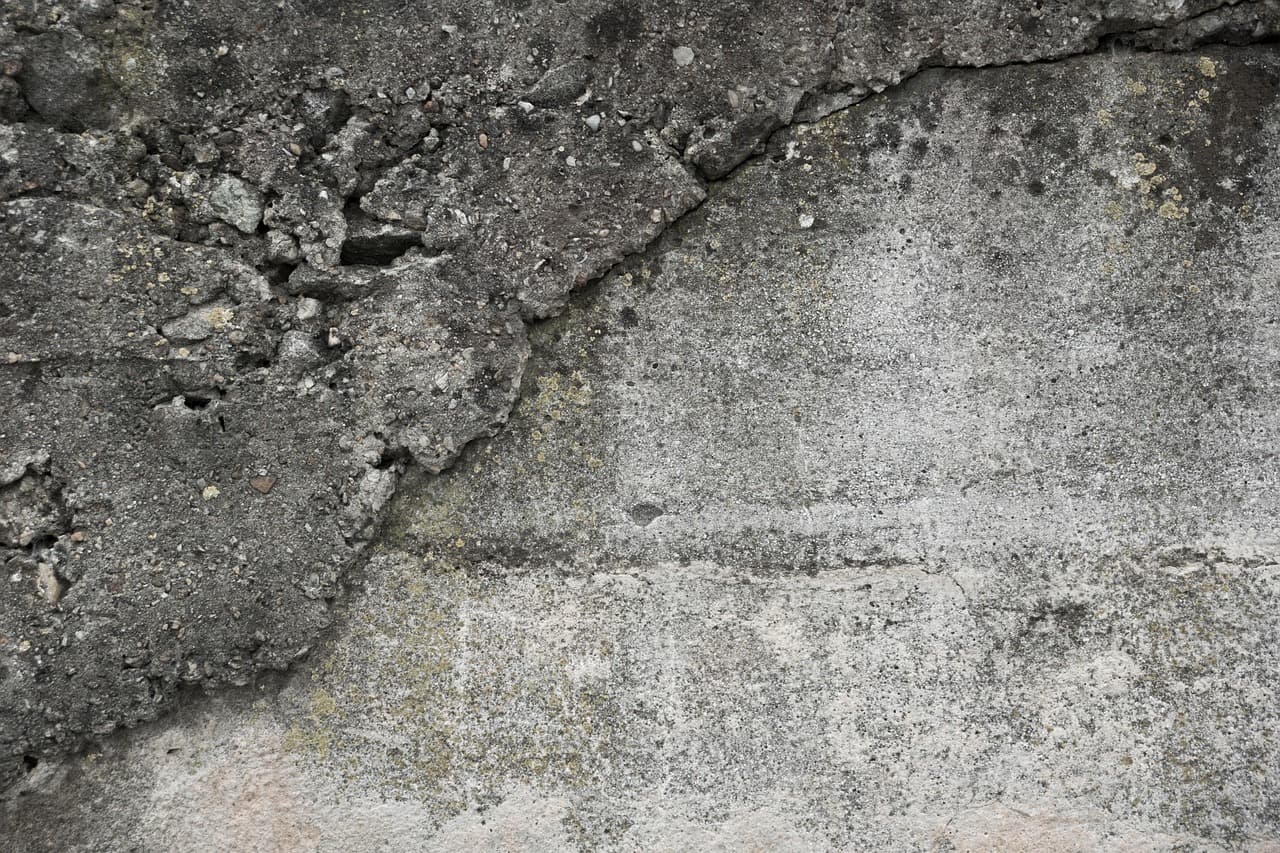
Foundation crack repair is the process of diagnosing, sealing, and stabilizing cracks in poured concrete or block foundation walls to stop water infiltration, restore structural integrity, and prevent progressive damage. Repair method and cost depend entirely on crack type: hairline shrinkage cracks are cosmetic, while stair-step, diagonal, and horizontal cracks can indicate settling, hydrostatic pressure, or active structural failure requiring professional intervention. Most interior repairs use epoxy injection to restore structural strength or polyurethane foam to stop active leaks, while exterior excavation is reserved for cracks with significant displacement or ongoing drainage problems that interior methods cannot address. Left unrepaired, foundation cracks allow water intrusion that leads to mold growth, efflorescence, insulation damage, and accelerating concrete deterioration.
Foundation cracks are one of the most common and most misunderstood home repair issues. Depending on crack type, width, location, and repair method, expect to pay $350 to $1,500 per crack for interior repairs or $2,000 to $7,000 per crack for exterior excavation repairs.
Foundation cracks are sometimes a symptom of broader water intrusion problems that require waterproofing in addition to crack repair. If you suspect your foundation cracks are part of a larger drainage or waterproofing issue, our cost calculator can help you estimate the full project scope.
How Much Does Foundation Crack Repair Cost in 2026?
The cost of repairing a foundation crack depends on three things: how bad the crack is, where it is, and which repair method is appropriate. Here is what homeowners are paying nationally in 2026.
Cost by Repair Method
| Repair Method | Cost Per Crack | Best For |
|---|---|---|
| Epoxy injection | $350 to $800 | Structural cracks in dry walls. Restores concrete tensile strength. |
| Polyurethane foam injection | $400 to $1,000 | Actively leaking cracks. Expands to fill voids and block water. |
| Carbon fiber straps | $800 to $1,500 per strap | Bowing or buckling walls with inward movement. Permanent stabilization. |
| Steel I-beam bracing | $1,000 to $3,000 per beam | Severe bowing walls. More invasive than carbon fiber but stronger. |
| Exterior excavation and membrane | $2,000 to $7,000 per crack | Cracks with significant displacement or drainage problems. Addresses root cause from outside. |
| Full foundation underpinning | $10,000 to $30,000+ | Active settling or sinking foundation. Piering or helical pier installation. |
Cost by Crack Type
| Crack Type | Urgency | Typical Repair Cost |
|---|---|---|
| Hairline shrinkage crack (under 1/16 inch) | Low — monitor | $0 to $300 if sealed |
| Vertical crack (1/16 to 1/4 inch) | Moderate — seal within season | $350 to $800 |
| Diagonal crack at corner | Moderate to high | $400 to $1,000 |
| Stair-step crack in block wall | High | $500 to $1,500 |
| Horizontal crack | Urgent — structural | $1,500 to $15,000 depending on severity |
| Crack with displacement or bowing | Urgent — structural | $2,000 to $30,000+ |
What Factors Drive Foundation Crack Repair Cost?
Crack Width and Displacement
Width alone does not tell the whole story. A crack under 1/8 inch with no horizontal displacement is almost always a water concern, not a structural one. Any crack showing horizontal displacement — where one side has shifted relative to the other — requires a structural engineer evaluation before repair. Displacement changes a $600 injection job into a potentially five-figure stabilization project.
Crack Direction
Vertical cracks are typically caused by normal concrete curing shrinkage or minor differential settling and are the least serious. Diagonal cracks running from window corners or at 45-degree angles suggest differential settling and need monitoring or repair depending on width. Horizontal cracks are the most serious because they indicate lateral soil pressure pushing the wall inward — this is a structural failure mode that requires immediate professional attention.
Interior vs Exterior Repair
Interior injection repairs ($350 to $1,500) access the crack from inside the basement, fill the void with epoxy or polyurethane, and are completed in a few hours with no excavation. They are effective for most non-displaced cracks. Exterior repairs ($2,000 to $7,000) require excavating down to the footing, cleaning the crack, applying a waterproof membrane, and backfilling. Exterior work addresses the root cause more completely but costs significantly more and disrupts landscaping. Most contractors recommend interior injection first unless the crack is displaced, actively draining large volumes of water, or has failed a previous interior repair.
Number of Cracks
Most contractors price per crack, though multiple repairs in one visit typically qualify for a discount of 10 to 20 percent per additional crack. A basement with five or six injection repairs may be quoted as a flat-rate project rather than per-crack pricing.
Active Water Infiltration
A dry crack uses epoxy injection, which is the cheaper option. An actively leaking crack requires polyurethane foam, which expands as it cures to fill irregular voids and block water flow. Polyurethane is slightly more expensive and cannot be substituted with epoxy on a wet crack since epoxy will not bond to a wet concrete surface.
Foundation Material
Poured concrete foundations are the easiest to inject and repair. Block foundations are more complex because water can travel through the hollow cores of the blocks, meaning a visible crack on the surface may be the exit point for water entering several blocks away. Block wall repairs often require more investigation and may involve filling cores in addition to surface crack repair.
Epoxy Injection vs Polyurethane Foam
The two most common interior repair methods work differently and are not interchangeable.
| Factor | Epoxy Injection | Polyurethane Foam |
|---|---|---|
| Structural repair | Yes — restores tensile strength | No — flexible seal only |
| Water stop | Partial — requires dry surface | Excellent — expands to fill wet cracks |
| Flexibility after cure | Rigid | Flexible |
| Best surface condition | Dry or slightly damp | Wet or actively leaking |
| Average cost | $350 to $800 per crack | $400 to $1,000 per crack |
| Longevity | 20+ years on stable crack | 10 to 20 years, may need retreatment if crack moves |
The rule of thumb: if the crack is dry and you want to restore structural strength, use epoxy. If the crack is wet or actively leaking, use polyurethane. A contractor who recommends epoxy on an actively leaking crack is either cutting corners or inexperienced.
DIY vs Professional Foundation Crack Repair
When DIY Makes Sense
Hairline cracks under 1/8 inch with no displacement, no active leaking, and no signs of progression are reasonable DIY candidates. Hydraulic cement ($15 to $30) can fill small surface cracks as a temporary measure. DIY polyurethane injection kits ($50 to $150) are available and can work on minor leaking cracks if the instructions are followed carefully. DIY is appropriate when the crack is cosmetic, stable, and not associated with any bowing, displacement, or structural concern.
When to Call a Professional
Call a professional when the crack is wider than 1/4 inch, shows horizontal displacement, is horizontal in orientation, is accompanied by bowing or bulging, is actively leaking a significant volume of water, or has been previously repaired and has reopened. Any crack that has changed in width or length since you first noticed it warrants a professional evaluation. Foundation repair is not the place to cut corners — an incorrect repair on a structural crack can mask a worsening problem until it becomes a catastrophic failure.
Getting a Structural Engineer Involved
For cracks showing displacement or any sign of active structural movement, a structural engineer evaluation ($300 to $700) before repair is money well spent. An engineer will assess whether the crack is stable or actively progressing, recommend the appropriate repair method, and provide documentation that protects your home’s value and insurability. Many foundation repair contractors can diagnose common crack types accurately, but an independent engineer has no financial stake in recommending a more expensive repair.
Does Homeowners Insurance Cover Foundation Crack Repair?
Standard homeowners insurance does not cover foundation cracks caused by settling, soil movement, hydrostatic pressure, or normal wear — which describes the cause of most foundation cracks. Insurance may cover crack repair when the damage resulted from a sudden, covered peril such as an earthquake (with earthquake coverage), a burst pipe that caused soil washout, or a vehicle impact.
Even in covered scenarios, most policies exclude “earth movement” as a covered cause, which can include settling and soil pressure. Read your policy carefully and contact your insurer before beginning any repair work to understand what documentation they require. A structural engineer report and pre-repair photographs are essential for any insurance claim involving foundation damage.
How to Monitor a Crack Before Repairing It
Not every crack needs immediate repair. For cracks that are hairline, dry, and showing no signs of displacement, monitoring for 60 to 90 days before repairing makes sense. A crack that is stable and not growing is a waterproofing concern. A crack that is actively widening is a structural concern.
To monitor a crack, draw pencil lines across the crack at both ends and note the date. Check monthly. If the crack extends beyond your marks or widens measurably, call a structural engineer. You can also use a crack monitor gauge ($20 to $50) for more precise tracking.
How to Prevent Foundation Cracks
Most foundation cracks are caused or worsened by water. The best prevention is managing moisture around your foundation.
Keep gutters clean and extend downspouts at least 6 feet from the foundation
Maintain positive grading away from the house — the soil should slope down at least 1 inch per foot for the first 6 feet
Do not allow soil to become waterlogged against the foundation from irrigation or drainage
Maintain a working sump pump with battery backup to prevent hydrostatic pressure buildup
Address efflorescence early — it signals water migration through the wall that will eventually find or create a crack
Keep large trees at least 20 feet from the foundation — root systems can exert significant pressure on foundation walls over time
Get Foundation Crack Repair Quotes
Compare free estimates from local foundation specialists. Protect your home’s value.
Frequently Asked Questions
How much does foundation crack repair cost in 2026?
Most homeowners pay $350 to $1,500 per crack for interior injection repairs. Epoxy injection runs $350 to $800 per crack for dry structural cracks. Polyurethane foam injection runs $400 to $1,000 per crack for actively leaking cracks. Carbon fiber strap installation for bowing walls costs $800 to $1,500 per strap. Exterior excavation repairs, which address the crack from outside the foundation, run $2,000 to $7,000 per crack. Severe structural failure requiring underpinning or piering can reach $10,000 to $30,000 or more depending on the number of piers required.
Are foundation cracks serious?
It depends on the type. Hairline vertical cracks under 1/8 inch with no displacement are common in poured concrete foundations and are usually the result of normal curing shrinkage. They are a water concern but not a structural one. Cracks wider than 1/4 inch, diagonal cracks showing displacement, stair-step cracks in block walls, and any horizontal crack are all more serious and warrant professional evaluation. A horizontal crack in a basement wall is always a structural red flag — it indicates lateral soil pressure pushing the wall inward and should be evaluated immediately.
What is the difference between epoxy and polyurethane crack repair?
Epoxy injection is a rigid repair that bonds the two sides of the crack together and restores the tensile strength of the concrete. It requires a dry surface to bond properly and is the right choice for structural cracks that are not actively leaking. Polyurethane foam injection is a flexible repair that expands as it cures to fill irregular voids and block water flow. It works on wet or actively leaking cracks where epoxy will not bond. Polyurethane does not restore structural strength — it is a waterproofing repair, not a structural one. Using the wrong method for the crack condition is one of the most common foundation repair mistakes.
Can I repair a foundation crack myself?
For small, dry, hairline cracks with no displacement, yes. DIY polyurethane injection kits are available for minor leaking cracks and can be effective if directions are followed carefully. However, anything wider than 1/4 inch, showing displacement, actively leaking significant water, or associated with any bowing or wall movement should be handled by a professional. Attempting to DIY a structural crack repair can mask a worsening problem and create liability issues when you eventually sell the home. A professional repair with documentation is also more reassuring to home inspectors and buyers than a DIY patch.
How long does foundation crack repair last?
A properly done epoxy injection on a stable crack lasts 20 years or more. Polyurethane foam repairs typically last 10 to 20 years and may need retreatment if the crack continues to move seasonally. Carbon fiber straps and steel I-beam bracing are considered permanent stabilization. Exterior excavation repairs with waterproof membrane application are the most durable option, lasting the life of the foundation when properly done. Any repair will fail prematurely if the underlying moisture or drainage problem driving crack formation is not addressed.
Does fixing a foundation crack increase home value?
Yes, documented professional crack repairs increase resale value by removing a significant inspection red flag. An unrepaired foundation crack — especially a horizontal one or one with displacement — can kill a sale or trigger a major price reduction. A repair with a transferable warranty from a licensed contractor is particularly valuable because it gives the buyer assurance that the problem was handled correctly. Buyers and their inspectors know the difference between a professionally repaired crack with documentation and a patched-over crack with no records.
When should I call a structural engineer about a foundation crack?
Call a structural engineer when the crack is horizontal, shows any horizontal displacement between the two sides, is wider than 1/4 inch, is associated with bowing or bulging of the wall, has changed in width or length since you first noticed it, or has been previously repaired and has reopened. A structural engineer evaluation costs $300 to $700 and is independent of any contractor who might benefit from recommending a more expensive repair. For any crack where you are uncertain about severity, an engineer evaluation is the right first step before spending money on repairs.
How do I know if my foundation crack is structural or cosmetic?
Three factors separate cosmetic from structural: direction, width, and displacement. Vertical hairline cracks under 1/8 inch with smooth edges and no displacement are almost always cosmetic shrinkage cracks. Horizontal cracks are always structural. Diagonal cracks at 45-degree angles or stair-step cracks in block walls are structural indicators that require evaluation. Any crack where one side has shifted relative to the other — even slightly — is structural regardless of width. When in doubt, draw pencil lines across the ends of the crack, note the date, and monitor it monthly. A crack that grows is a crack that needs professional attention.
Glossary
Foundation Crack
A fracture or separation in a poured concrete or masonry block foundation wall caused by curing shrinkage, differential settling, hydrostatic pressure, freeze-thaw cycles, or structural overload. Not all cracks are equal — type, direction, width, and displacement determine severity and repair method.
Epoxy Injection
A repair method that injects a two-part epoxy resin into a crack under low pressure to fill the void and bond the two sides together. Restores the tensile strength of the concrete and is appropriate for dry, stable structural cracks. Requires a dry surface and is not suitable for actively leaking cracks.
Polyurethane Foam Injection
A repair method that injects expanding polyurethane foam into a crack to fill voids and block water infiltration. Flexible after curing, allowing for minor seasonal movement. The correct method for wet or actively leaking cracks. Does not restore structural strength.
Hydrostatic Pressure
The force exerted by water-saturated soil against a foundation wall. As groundwater accumulates with no drainage path, pressure builds against the wall and floor slab, causing horizontal cracking, bowing, and seepage. Relieved by perimeter drainage systems and sump pumps. See our French drain vs sump pump guide for drainage solutions.
Carbon Fiber Straps
High-tensile-strength carbon fiber straps epoxied vertically to a bowing basement wall to prevent further inward movement. A permanent stabilization method that does not require excavation. Does not push the wall back to its original position but prevents further movement. Cost runs $800 to $1,500 per strap.
Horizontal Crack
A crack running horizontally across a foundation wall, typically at mid-height. Indicates lateral soil pressure pushing the wall inward and is always a structural concern requiring professional evaluation. The most serious common foundation crack type.
Differential Settling
Uneven sinking or movement of different sections of a foundation caused by variations in soil bearing capacity, moisture content, or load distribution. Produces diagonal cracks at corners and around window openings. Minor differential settling is common; progressive settling requires engineering evaluation and possible underpinning.
Efflorescence
White, chalky mineral deposits left on concrete or masonry surfaces when water migrates through the wall and evaporates, depositing dissolved salts. Not mold, but a reliable indicator of water infiltration through the foundation. Often appears near cracks or at mortar joints. See our efflorescence guide for more detail.
Exterior Excavation Repair
A foundation crack repair approach that involves digging down to the footing on the outside of the foundation wall, cleaning and preparing the crack surface, applying a waterproof membrane or hydraulic cement, and backfilling. More expensive than interior injection but addresses the crack from the water-entry side and is more durable for severely displaced or high-volume leaking cracks.
Underpinning
A structural repair method used when a foundation is actively settling or sinking. Steel push piers or helical piers are driven into stable soil below the settling zone and attached to the foundation to transfer the load. The most expensive foundation repair category, ranging from $10,000 to $30,000 or more depending on the number of piers required.
Related Guides
On TheBasement.Guide
Types of Foundation Cracks
Diagnose whether your crack is cosmetic or a structural red flag.
Bowing Basement Walls
Causes, repair methods, and costs for bowing and leaning walls.
Complete Basement Waterproofing Guide
Everything you need to know about stopping basement leaks for good.
Basement Efflorescence Explained
What that white powder on your walls really means and how to stop it.
French Drain vs Sump Pump
Which drainage system do you need, and do you need both?
Basement Waterproofing Cost
Full cost breakdown for interior and exterior waterproofing systems.
Interior vs Exterior Waterproofing
Which approach is right for your basement and budget?